





The article explores what email validation is, why it matters, how it works, and how businesses can use it to maintain cleaner and more reliable email lists.
Email is among the most widely used communication and marketing channels that are used today. Businesses generally rely on email to connect with customers, send important updates, run marketing campaigns, and build long-term relationships. But there is one common issue that can undermine it all, i.e., invalid email addresses.
Whether an email address contains a simple typo, belongs to a non-existent domain, or is no longer active, sending messages to such an address can lead to increased bounced emails, along with poor deliverability and wasted resources. This is where email validation comes into action.
What is Email Validation?
Email validation is the process of checking whether an email address is correctly formatted, belongs to a valid domain, and is likely to be able to receive emails. The process helps businesses identify invalid, mistyped, or potentially risky email addresses before sending messages.
Email validation is especially useful for web forms, user registrations, email marketing campaigns, CRM databases, and contact-list management. The process enables businesses to reduce bounced emails, maintain cleaner contact lists, improve deliverability, and avoid wasting resources on addresses that are unlikely to receive messages.
Email validation can be the first step toward building higher-quality lead data. Lead enrichment tools can help businesses add information such as company name, job title, industry, company size, location, and other relevant attributes to existing lead records.
Benefits of Email Validation

Email validation offers various key benefits for businesses that collect, store, or send emails. By identifying invalid or risky addresses before sending messages, organizations can maintain healthier email lists and improve the overall performance of email communication.
Some of the key benefits of email validation include:
Reduces Email Bounces
One of the major benefits of email validation is that it reduces bounced emails. Removing invalid or inactive email addresses before sending can significantly reduce bounce rates.
Improves Email Deliverability
A high number of bounced or rejected emails can affect the sender’s reputation negatively. Email validation helps maintain a cleaner list, improving the chances of getting legitimate emails delivered successfully to recipients’ inboxes.
Keeps Email List Clean
Over a longer period of time, email databases can accumulate duplicate, inaccurate, inactive, or fake addresses. Constant validation helps businesses identify problematic contacts and maintain a more accurate and useful database.
Saves Time and Money
Sending emails to invalid addresses also provides no business value. For companies using email platforms that are charged based on contacts or email volume, removing invalid addresses can help reduce unnecessary costs.
How Does Email Validation Work?
The process of email validation involves multiple layers of checks. The exact process depends on the Email validation tools, but the general process includes the following steps:
Step 1: Syntax Check
The first step is to check whether the email address follows the expected structure. Syntax validation is a fast process and can often be performed immediately when a user enters an address into a form.
Step 2: Domain Check
After checking the format, an email validation system can examine the domain. The system can check whether the domain exists and whether it has the necessary DNS records associated with receiving emails.
Step 3: MX Record Check
MX (Mail Exchange) records are among the most important technical checks. MX records are DNS records that identify the mail servers responsible for receiving email for a domain.
Step 4: Mailbox-Level Checks
Various validation services perform additional checks to determine whether a specific mailbox may exist. These checks can involve communicating with the receiving mail server without necessarily sending an actual email.
Email Validation vs Email Verification
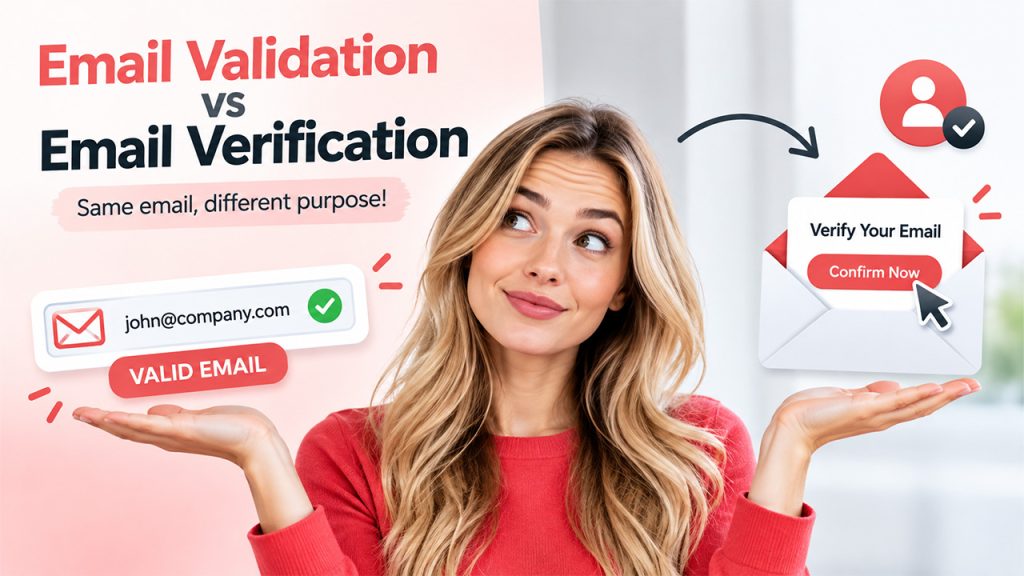
Email Validation and email verification are often used interchangeably, but they serve slightly different purposes. Email validation checks whether an email address appears to be technically valid. Whereas email verification services are about confirming that the email address belongs to the person who provided it.
The key difference between email validation and email verification is as follows:
| Email Validation | Email Verification |
| Checks technical validity. | Confirms ownership or access. |
| Can happen before sending an email. | Usually requires sending an email. |
| Checks syntax, domain, DNS, mailbox signals, etc. | Uses a confirmation email, link, or code. |
| Helps identify invalid or risky addresses. | Confirms that the user can access the inbox. |
| Primarily focused on deliverability. | Primarily focused on ownership/access. |
Best Practices for Email Validation
Email validation generally works best when it is treated as an ongoing process of email list cleaning. Businesses can follow the practices listed below to keep their databases accurate, reduce bounce rates, and improve deliverability.
Validate Emails at the Point of Collection
The best time to eliminate invalid email addresses is before it enters the database. Users can add real-time validation to signup, registration, checkout, and lead-generation forms.
Use Both Syntax and Domain Checks
A good validation process should examine the email syntax and determine whether the domain exists and is configured to receive email.
Regularly Clean the Email List
Email addresses can become invalid over time. Users need to perform periodic bulk validation of the existing database to identify invalid, risky, disposable, or outdated addresses.
Remove or Suppress Hard Bounces
Businesses should remove the address from active campaigns or place it on a suppression list, instead of repeatedly attempting delivery. This can help reduce unnecessary bounces and protect your sender’s reputation.
Conclusion
Email validation is considered a fundamental part of maintaining a healthy email database. The process helps businesses identify invalid or inactive addresses, detect problematic domains, reduce unnecessary bounces, improve data quality, and make email campaigns more efficient. By validating email addresses before and during their lifecycle in your database, users can spend less time dealing with bad data and more time communicating with people who actually want to hear.
Frequently Asked Questions
Email validation generally involves multiple checks, which include syntax validation, domain verification, DNS and MX record checks, and, depending on the service, mailbox-level and risk checks.
An email syntax check determines whether an address follows the expected email format. It can identify problems like a missing @ symbol, an incomplete domain, invalid characters, or other formatting errors.
No, email validation does not guarantee email delivery. Email validation can determine whether an address appears technically valid and deliverable.
Yes, email validation can reduce bounce rates. By identifying invalid, nonexistent, or risky addresses before sending emails, validation can help reduce unnecessary bounces and improve the overall quality of an email list.